Most organisations list their laptops and servers. Fewer list the controllers that run their fridges or building systems. These attacks show why they belong on the same list.
Updated 11 November 2026: France has named who it holds responsible, and new research shows how the controllers were reached.
What happened
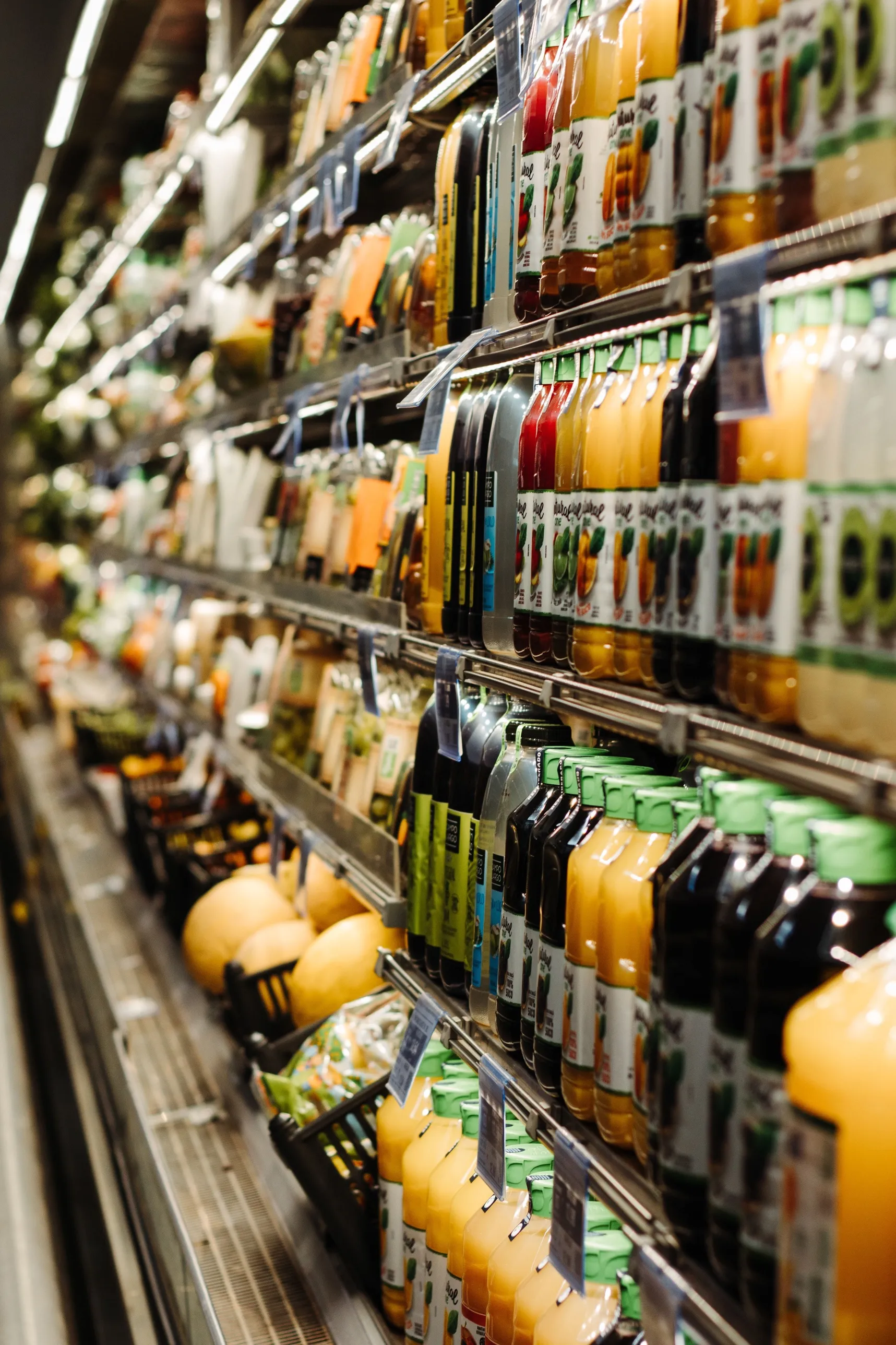
From 11 to 13 October 2026, attackers reached refrigeration controllers in hundreds of French supermarkets. They switched units into defrost mode remotely, often overnight, and food was lost. At one group of chains, the attack reportedly targeted a service provider that manages the equipment.
CERT-FR, the French national computer emergency response team, issued an alert on 12 October and updated it on 13 October. It names Danfoss AK-SM and AK-SC controllers, Copeland xweb and Dixell xweb systems. It warns that the campaign is probably continuing, and that unpatched equipment past its end of life faces a particularly high risk.
The director of ANSSI, France’s national cyber security agency, told the French Senate the cause was exposed administration interfaces and weak passwords.
A second wave followed on 2 and 3 November in countries including Belgium, the Netherlands, Sweden, Ireland, Luxembourg and Estonia. Some units reached 50°C. Reported store numbers vary widely. How the attackers got in this time is not yet known.
On 3 November, France’s blood service, the Établissement français du sang (EFS), confirmed an incident at one of its refrigeration equipment providers. Temperature and defrost settings were changed at three of its blood storage facilities.
On 5 November, CISA, the FBI and the US Departments of Agriculture, Health and Human Services, and Transportation issued a joint fact sheet. It warns of an ongoing threat to internet-connected refrigeration and cold chain monitoring systems. Attackers may force continuous heating or defrost cycles, and hide the real temperatures from staff.
Many of the controllers involved are old. The Danfoss AK-SM 800 reached end of life in 2021, and the AK-SC 366 was phased out in 2016.
Update, 11 November 2026: France names who it holds responsible
On 9 November, France attributed the October wave to Iran. Its foreign ministry named Shahid Kaveh, an offensive cyber unit linked to Iran’s Islamic Revolutionary Guard Corps. It says more than 700 supermarket sites were targeted overnight on 11 to 12 October. It estimates the food losses at tens of millions of euros. France called it the first cyber campaign on its territory carried out purely for sabotage.
ANSSI says at least 15 cases led to fires. Butchers, a slaughterhouse and food processing cooperatives were also hit. At the same time, Schneider Electric equipment at several small hydroelectric sites was targeted, with moderate effects. The Paris prosecutor has opened a judicial investigation and requested international arrest warrants.
On 10 November, Sekoia, a French cyber security company, published its analysis. It found the main weakness was unpatched Danfoss controllers reachable from the internet. On 11 October, more than 2,700 such systems were exposed worldwide, about 1,700 of them in France. By the next afternoon, about half of the French ones could no longer be reached.
Sekoia saw one exploitation attempt, on 1 November. It used a flaw that hasn’t been made public, which renames the main administrator account without signing in. Its decoy controllers also received attempts to sign in with the password “12345”. Sekoia believes the same group carried out both waves.
What to do now
The US agencies advise taking controllers off the internet and putting any remote access behind an up-to-date firewall or gateway. Change default passwords, patch promptly, and replace devices that no longer get security updates. Keep this equipment on its own network and review its logs. CERT-FR adds that compromised equipment should be reset to factory settings and reconfigured. For end-of-life units a reset isn’t enough, because the weakness remains. Sekoia’s findings point to the same first step: make sure no controller can be reached from the internet.
The RiskWitness Blueprint, our security framework, sets out what to have in place. These requirements are the ones these attacks test.
- RW-DEV-01 A list of every device (Foundation). Include controllers and monitoring equipment, with the person responsible for each.
- RW-DEV-04 Default passwords changed (Foundation). Equipment included.
- RW-DEV-06 Unsupported products replaced (Foundation). Isolate anything that can’t be replaced yet.
- RW-NET-03 Network equipment admin pages kept off the internet (Foundation). A controller’s web interface is an admin page.
- RW-SUP-02 Supplier access limited to the job (Foundation). Maintenance companies often connect remotely. Keep a record of what they do.
- RW-NET-18 Everything exposed to the internet is known (Established). Check regularly, and close what shouldn’t be reachable.
- RW-NET-10 Network divided into zones (Established). Keep equipment that can’t be secured in its own zone.
- RW-RES-08 Continuity plans for critical activities (Established). Plan how stock would be kept safe if the controllers can’t be trusted.
- RW-GOV-26 Threats understood and used in judging risk (Established). A state-linked unit has now been named. Write down which groups target organisations like yours and where you learned it, and use that when you score the risk.
- RW-DET-06 Urgent security warnings acted on (Foundation). Follow warnings from your national cyber security agency and your equipment suppliers, and act on them quickly.
How RiskWitness helps
Record the equipment. Add each controller as an asset, with an owner and where it’s kept. Note which ones are past their end of life.
Record the supplier. Add the company that maintains the equipment and link it to those assets. Send a questionnaire on how it connects remotely, and store the answers as assurance evidence.
Record the risk. Add a risk for someone changing controller settings remotely, with an owner. Score it before and after controls, and choose a treatment.
Record the threat behind it. Name the threat in the risk’s cause, with its source. For example: “a state-linked unit changing controller settings through admin pages reachable from the internet (ANSSI, 9 November 2026)”. On Business and above, add it as a threat on the risk’s bow-tie diagram. Then place the controls that stop it, such as the remote access gateway, against it. If an incident happens, record which threat it came through, so the bow-tie shows what really happened.
Re-score it as the facts change. France’s attribution and Sekoia’s findings tell you more about who is attacking and how. Revisit the likelihood, the treatment and the review date. The old and new scores stay in the history.
Link and test your controls. Add controls such as changed passwords, a remote access gateway and a separate network zone. Log tests, such as checking no controller is reachable from the internet. Map each control to the requirements above, and RiskWitness shows how well each is met.
Give each gap an owner. Create actions, such as replacing an end-of-life unit, each with an owner and a due date. Overdue actions show on the dashboard.
Record any acceptance properly. If an old controller must stay for now, record the reason and an expiry. Outside your tolerance, a named approver signs it off.
Record the incident if it happens. Link the affected assets, the supplier and the risk. RiskWitness shows which regulators may need telling, with their deadlines.
Report it. Produce a PDF report or slide deck for leadership.
Every step is kept in a history that shows who did what, when, and the old and new values. Nobody can edit or delete it. When leadership, an auditor, a customer or a regulator asks how you protect equipment like this, the answer is already written down.
Sources
- Déclaration d’attribution à l’Iran de cyberattaques visant la France, French Ministry for Europe and Foreign Affairs, 9 November 2026 (English version, 10 November 2026)
- Campagnes de déstabilisation et sabotage menées à l’encontre des intérêts français par la République islamique d’Iran, ANSSI, 9 November 2026
- Activités cyber offensives ciblant la France menées par des acteurs iraniens liés au CGRI (CERTFR-2026-CTI-009), CERT-FR, 9 November 2026
- Cold chain attack: unpatched Danfoss controllers exploited, Sekoia, 10 November 2026
- France blames Iran for fridge cyberattacks, The Record, 9 November 2026
- French Cybersecurity Agency Warns of Attacks on Refrigeration Controllers, RefIndustry, 15 October 2026
- Dangerous flaws in refrigeration equipment were disclosed months before retail attacks, Cybersecurity Dive, 13 October 2026
- Defrost and disrupt: an assessment of Europe’s refrigeration attacks, SentinelLABS, 3 November 2026, updated 4 November 2026
- FBI, CISA warn of cyberattacks targeting refrigeration systems, BleepingComputer, 5 November 2026
- US government warns of ‘ongoing cyber threat’ amid mass hacks of industrial retail and military freezers, TechCrunch, 5 November 2026
- Feds warn grocers: don’t chill on cyber defenses as freezer hacking spree heats up, The Register, 5 November 2026